Physical Address
304 North Cardinal St.
Dorchester Center, MA 02124
Physical Address
304 North Cardinal St.
Dorchester Center, MA 02124

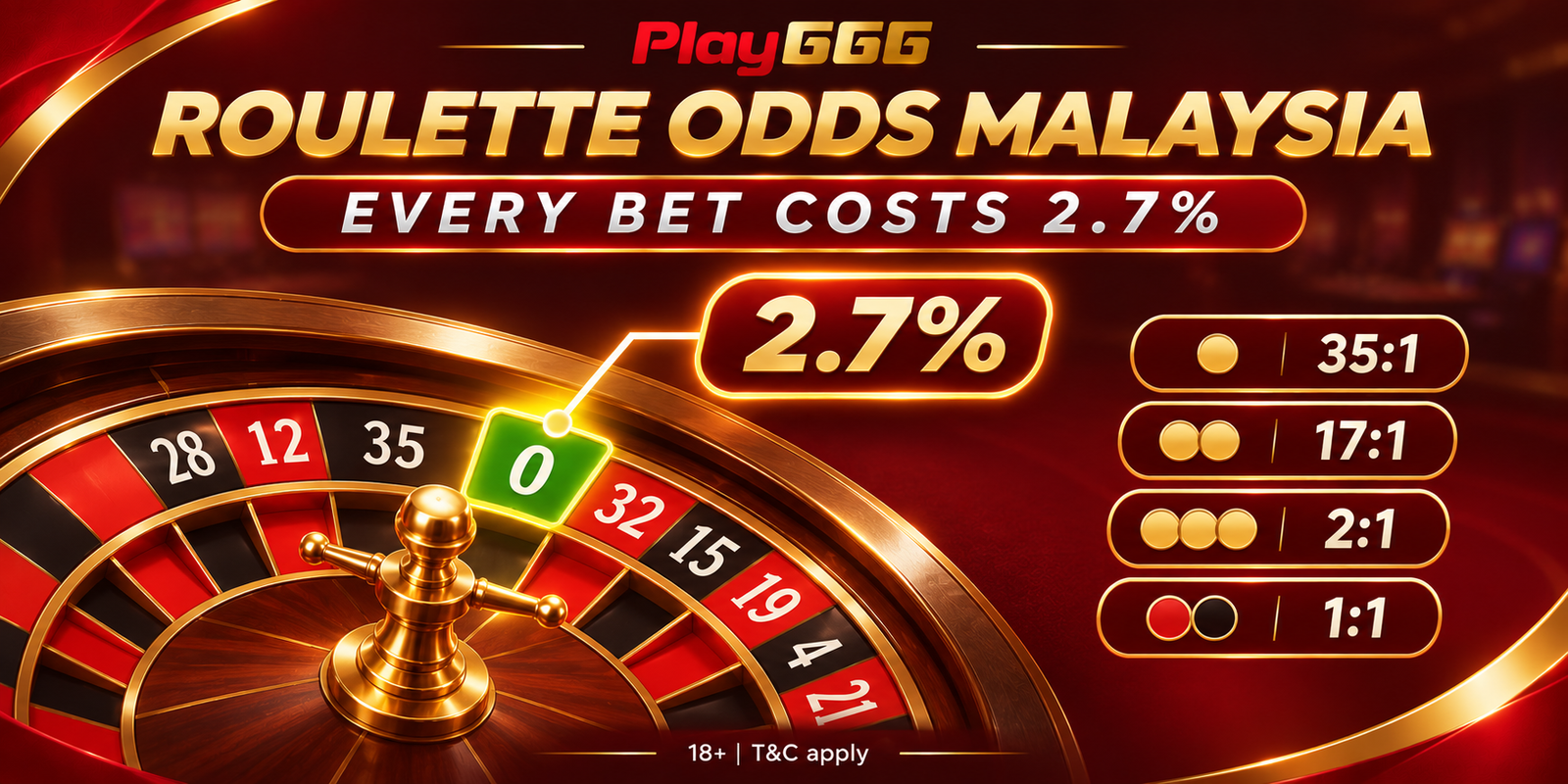
Roulette looks like it offers a menu of different odds. It doesn’t — every bet on the table costs the same, and one pocket explains why.
Roulette looks like a menu of choices. Bet one number for a big payout, or spread across red for a safer one. It feels like you’re choosing between different odds.
You aren’t. Every bet on a roulette table carries exactly the same cost, and the reason is one pocket most explanations leave out.
A European roulette wheel has 37 pockets: 1 through 36, plus a single zero.
That zero is the whole game. Payouts are calculated as though there were only 36 numbers, but there are 37 pockets. That one-pocket gap between what the game pays and what the odds actually are is the house edge — 2.7% on every spin.
Anyone telling you a single-number bet wins 1 in 36 has quietly deleted the mechanism by which the casino makes money.
Inside bets cover specific numbers on the grid:
Notice the pattern: each payout is built as though 36 numbers existed. Thirty-six divided by one is 36, so a straight-up pays 35 to 1 — you get 35 plus your stake back. Thirty-six divided by six is six, so a six-line pays 5 to 1.
Consistent, logical, and short by exactly one pocket every time.
Outside bets cover large groups:
These feel safer because they win more often. They are not cheaper.
Run the arithmetic on two bets that look nothing alike.
Straight up: you win 1 time in 37 and collect 35. Over 37 spins staking one unit each, you stake 37 and get back 36. You’re down one unit in 37 — 2.7%.
Red: 18 pockets are red out of 37. You win 18 times and lose 19. Over 37 spins you stake 37 and get back 36. Down one unit in 37 — 2.7%.
Identical. The straight-up bet swings wildly and the red bet grinds, but they cost the same per unit staked. What changes between bet types is volatility, not price.
This is why no arrangement of bets improves your position. Spreading across more numbers raises how often you win and lowers what you collect, in exactly offsetting proportion. There is no “return limitation” rule that punishes wide coverage — just the same 2.7%, everywhere on the table.
American roulette adds a second zero. Thirty-eight pockets, same 35-to-1 payout on a straight-up.
That single extra pocket takes the edge from 2.7% to 5.26%. Same game, same bets, nearly double the cost per spin.
Choosing a European table over an American one is worth more than every betting pattern ever invented, combined. If both are available, there is no argument for the American wheel.
For how roulette compares against other games, see house edge explained. For why betting systems don’t change any of this, see roulette strategies and why they fail.
Terms and conditions apply. 18+ only. Please bet responsibly.